
Khamenei’s Legacy: Repression, Power, Purges, War
Ayatollah Ali Khamenei rose from revolutionary protégé to Iran’s most powerful figure, overseeing decades of conflict, repression, and regional proxy wars that reshaped the Middle East.

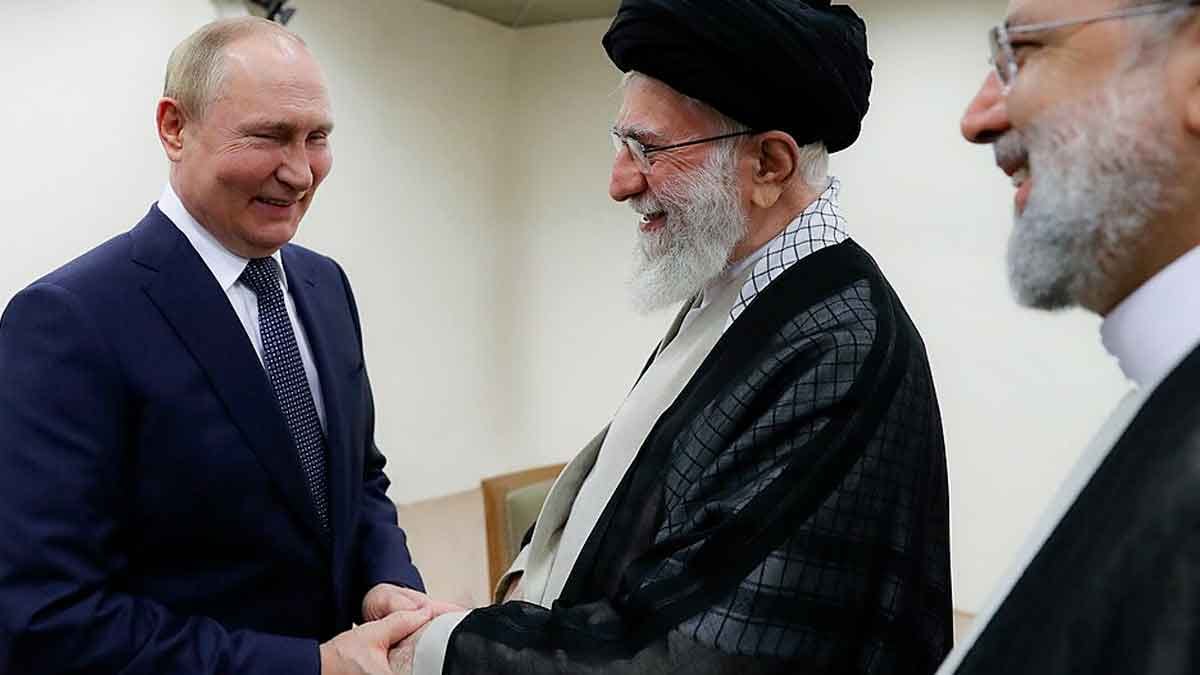
Iranian state-controlled media confirmed that Supreme Leader Ayatollah Ali Khamenei was killed by a US-Israeli attack on February 28. He was the head of Iran for 37 years, turning the country into a pariah state aligned with other dictatorships. Who was Khamenei, and what was his path to power?
Born in 1939, Ayatollah Ali Khamenei served as the president of Iran from 1981 to 1989 before being named Supreme Leader. He was the protégé of Ayatollah Ruhollah Khomeini, who led the Iranian Revolution in 1978, deposing the Shah of Iran, Mohammad Reza Pahlavi.
To protect British Petroleum’s interests at the start of the Cold War, the British government tried to convince the United States to support a coup d’état in Iran. In 1951, Iran’s Prime Minister Mohammad Mosaddegh, with support from Parliament, nationalized the nation’s oil industry, stripping the British company of its assets. Despite pressure from London, the Truman administration did not support the plans for the overthrow.
Wait. Malcontent News is an independent news agency established in 2016. We are a Newsbreak publisher partner and a Google News affiliate. We avoid advertising and sponsorships to remain an independent voice. If you’re enjoying our content, please consider subscribing to our Substack, Patreon, or Newsbreak. Premium subscribers gain access to all of our content. Now, back to the story.
In 1953, the Eisenhower administration reluctantly supported the removal of Mosaddegh, ordering the Central Intelligence Agency (CIA) to work with British MI6. Reza returned to Iran after four years of exile, with the backing of London and Washington.
Over the next decade, Reza’s power grew, as did the discontent of religious hardliners. Reza’s first clashes with Muslim fundamentalists were in 1962, when he initiated a series of secular reforms. Khomeini was against the changes, demanding they be reversed. The ultimatums were ignored, and Iran continued down a secular path. After a series of political moves to consolidate his power, Reza was crowned Shahanshah (Shah) in 1967, making him a dictator.
Under the Shah’s leadership, Iran became the wealthiest country in the Middle East and one of the world’s most powerful militaries. But it came at the price of increasingly brutal repression and a growing gap between the haves and the have-nots.
As unrest against his rule grew, student-led protests backed by Ruhollah Khomeini spread. On September 8, 1978, a day called Black Friday, the Imperial Army of Iran opened fire on protesters in Jaleh Square. Sixty-four people were killed, and another 205 were wounded. The incident started the Iranian Revolution. The CIA grossly underestimated Khomeini’s influence and was blindsided by how quickly the revolution took hold. Reza and his closest allies fled to the United States in February 1979.
On November 4, 1979, the US Embassy in Tehran was stormed by Iranian students, who took 52 diplomats as hostages. The crisis lasted 444 days and contributed to President Jimmy Carter’s failed reelection campaign.
Khomeini was named Supreme Leader of Iran in December 1979. Under his rule, he rapidly dismantled decades of secularization and implemented harsh repression against women, Christians, Shiite Muslims, and Jews.
He formed the Basij as a paramilitary volunteer militia, who initally were used as assault troops during the Iran-Iraq War from 1980 to 1988. The Basij now acts as a paramilitary police force that enforces Sharia law and maintains control. Khomeini also created the Islamic Revolutionary Guards Corps (IRGC), as an elite personal army deeply loyal to the authority of the Supreme Leader.
The rapid spread of the Iranian Revolution also caught the Soviet Union off guard. The rapid acceptance of Islamic fundamentalism was a significant factor in Moscow’s decision to invade Afghanistan in 1980. The Russo-Afghan War lasted for 8 years and turned into a quagmire, contributing to the collapse of the Soviet Union.
Khomeini died in 1989 of natural causes. The Assembly of Experts, an 88-member Body of Shia Islamic clerics, named Ali Khamenei, who had served as president of Iran since 1980, as the next Supreme Leader.
During his time as president and Supreme Leader, Khamenei oversaw millions of deaths from the Iran-Iraq War and proxy wars in Jordan, Lebanon, Syria, Iraq, Yemen, the Palestinian Territories, and Israel. His government also supported acts of terrorism on a global scale.
Despite Khamenei’s support of terrorism, the Islamic Revolutionary Guards Corps (IRGC) is fundamentally opposed to al-Qaeda and Islamic State extremist groups due to their Sunni Islam alignment. The terror groups view the Iranian Revolution as too liberal in its interpretation of Sharia law. Al Qaeda and ISIS have carried out terror attacks within Iran and fought against Iranian proxy forces in Syria and Iraq during the period of the Caliphate.
In 2022, Iran sold drone technology to Russia to use against Ukraine. In the last 3.5 years, Russia has launched over 57,000 Shahed-131/136/238 strike drones, killing thousands of civilians and causing billions of dollars in damage.
In 2023, Khamenei coined the term “Axis of Resistance,” an alliance of proxy forces seeking the destruction of Israel. The core of the Axis once included Iran, Lebanese Hezbollah, Hamas, Palestinian Islamic Jihad (PIJ), the Yemeni Houthis, Iranian-backed Iraqi Shiite militias, the Syrian government, and Iranian militias within Syria.
He also aligned his nation with the broader Axis of Resistance, a coalition of nations seeking to end the post-World War II rules-based order. Led by Russia, the Axis also included Belarus, Syria, and North Korea. Syria left the Axis after dictator Bashar al-Assad was overthrown and fled to Moscow in December 2024.
Khamenei’s focus on religious and political violence wasn’t limited to regions outside of Iran. During his 37 years as Supreme Leader, he oversaw a series of mass political purges and repression of dissent, killing up to 100,000 people, including an estimated 30,000 to 36,000 in January 2026.
With Iran confirming his death, a new Supreme Leader has not been named. It is also unclear if the most likely successors survived the February 28 attack on his Tehran compound, which killed between five and ten members of his inner circle.
This can of worms has been opened; there is no going back; you can apply all the lipstick on the planet and it still won't disguise this pig...this will end the trump regime...