
Unstoppable Nuclear Power Reduced to Attacking with Mounted Cavalry in Ukraine
In an attempt to take advantage of poor weather, Russia attacked Ukrainian positions southeast of Pokrovske with mounted cavalry.


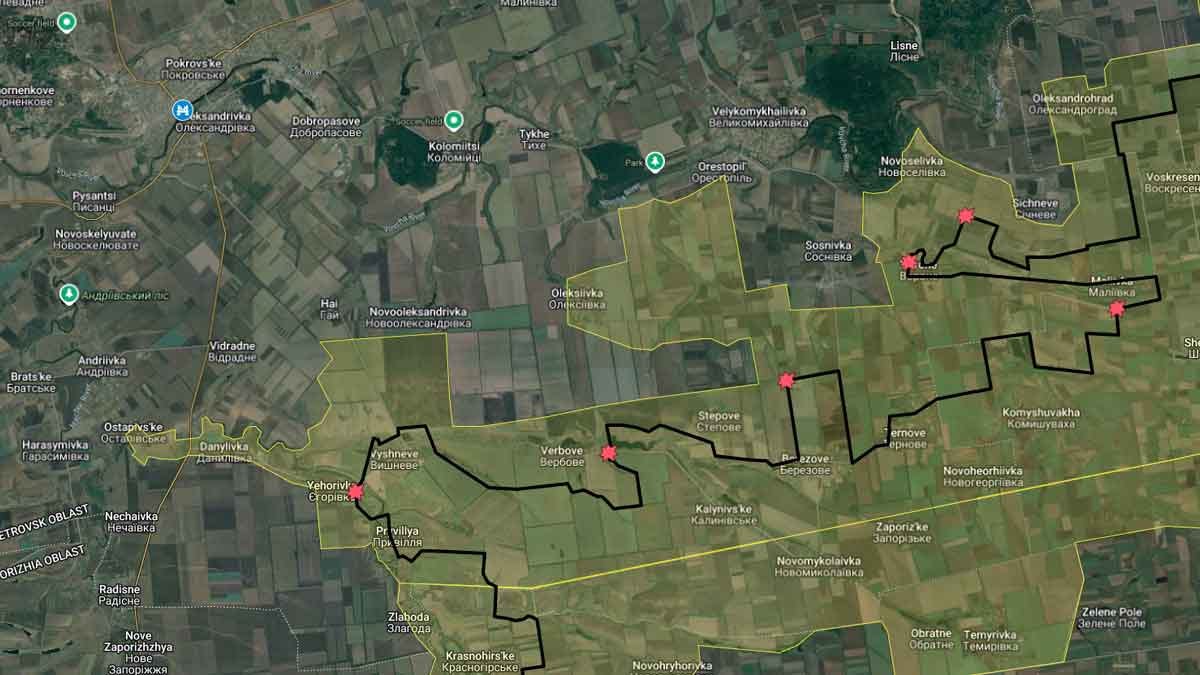
On Sunday, Russian forces launched a squad-sized assault of mounted horse cavalry in the direction of Oleksiivka, a small village in the Dnipropetrovsk Oblast southeast of Pokrovske.
The attack occurred during poor weather conditions with low visibility, but Ukrainian drone operators were prepared. “It’s a shame about the horses,” one drone operator wrote on Telegram after the brief engagement, which saw the squad wiped out and only one horse surviving after it threw its rider.
The Russian assault never reached the Ukrainian defenses, and exposed that Russia does not control Oleksiivka or Tykhe, despite waving flags in both villages in November.
Militaries around the world continue to use pack animals, and the U.S. Army used horses in Afghanistan in remote, rugged areas for carrying supplies and reconnaissance. The last significant recorded attack by a Western power using mounted cavalry was in August 1942.
Russia introduced horses, donkeys, and camels to the field in late 2024 due to a growing shortage of armored vehicles and the success of Ukrainian drones creating air interdiction zones up to 20 kilometers deep. However, until Sunday, they had been used only as pack animals and occasionally eaten.
Over the summer, the Russian Defense Ministry released a video showing soldiers being trained in horsemanship and mounted cavalry tactics. Russian state media defended the practice, boasting that during World War II, Russian troops defeated the Germans by riding horses to Berlin.
Russian troops who have been issued pack animals have been forced to crowdsource on Telegram and VK for feed and other needs, with the Kremlin expecting the animals to forage for food.
Moscow isn’t facing a shortage of armor, but due to the advances in drone warfare, losses skyrocketed in 2024. Additionally, as Russia’s Cold War reserves have dwindled, Russian troops have increasingly been forced to use outdated Cold War tanks such as the T-62, older BTR armored fighting vehicles, and light-armored amphibious BMD-4 infantry fighting vehicles in non-amphibious roles.
In 2025, Russia shifted its strategy, relying more on small sabotage and reconnaissance squads (DRGs) that infiltrate Ukrainian defense and build up a larger force behind their positions. In open territory and small villages, the tactic has been effective but has increased casualties. In urban warfare, Russian troops have repeatedly been bogged down.
Since Russia expanded its war of aggression against Ukraine on February 24, 2022, Moscow has captured approximately 1.1% of Ukrainian territory and is on track to seize approximately 4,200 square kilometers in 2025, an area roughly the size of Rhode Island. New advances slowed significantly in December.
Wunderwaffe Claims, Cavalry Realities
As the second-largest military on the planet attacks Ukraine with mounted cavalry, Moscow has claimed it has deployed numerous new wunderwaffe in 2025, including the Oreshnik intermediate-range ballistic missile, the nuclear-powered 1,000-meter-high tidal-wave-producing Poseidon torpedo, the nuclear-powered Burevestnik subsonic cruise missile, and the S-500 high-altitude air defense system.
Oreshnik has since been confirmed to be a rebranded RS-26 Rubezh IRBM, built from 2011 to 2018. The RS-26 is based on the RS-24 Yars intercontinental ballistic missile, with the third stage removed.
The United States and the Soviet Union independently researched using nuclear weapons to produce tidal waves during the Cold War, with both powers concluding they were impractical weapons.
Even if Poseidon has the claimed 100 megaton warhead, it is mathematically impossible for the weapon to produce a tidal wave large enough to swallow up the United Kingdom, as Moscow has repeatedly claimed.
Western intelligence acknowledged that Russia tested a subsonic cruise missile with a range in excess of 8,000 kilometers this fall. Still, no radioactive trace was detected, raising questions about the alleged nuclear propulsion system.
During the Cold War, the United States developed a supersonic nuclear-powered cruise missile but concluded it was too impractical and had too much risk of causing collateral damage. The U.S. and the Soviet Union also experimented with nuclear-powered strategic bombers. The U.S. abandoned the program while the Soviet Union conducted several test flights, but concluded that the long-term radiation exposure would eventually kill the crews.
As for the deployment of the S-500 air defense system, Russia made the same claim in December 2024 and even recycled the 2024 video in this year’s announcement.